Click on the image to zoom

Bottle
- Accession Number:AKM552
- Place:Eastern Iran
- Dimensions:35.5 cm
- Date:1100s
- Materials and Technique:Ceramic
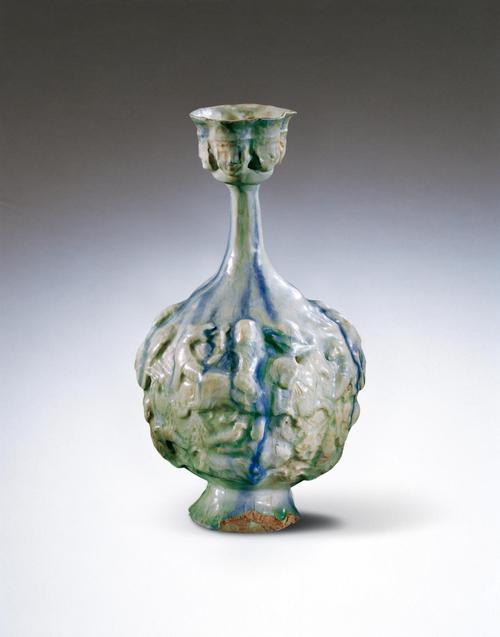
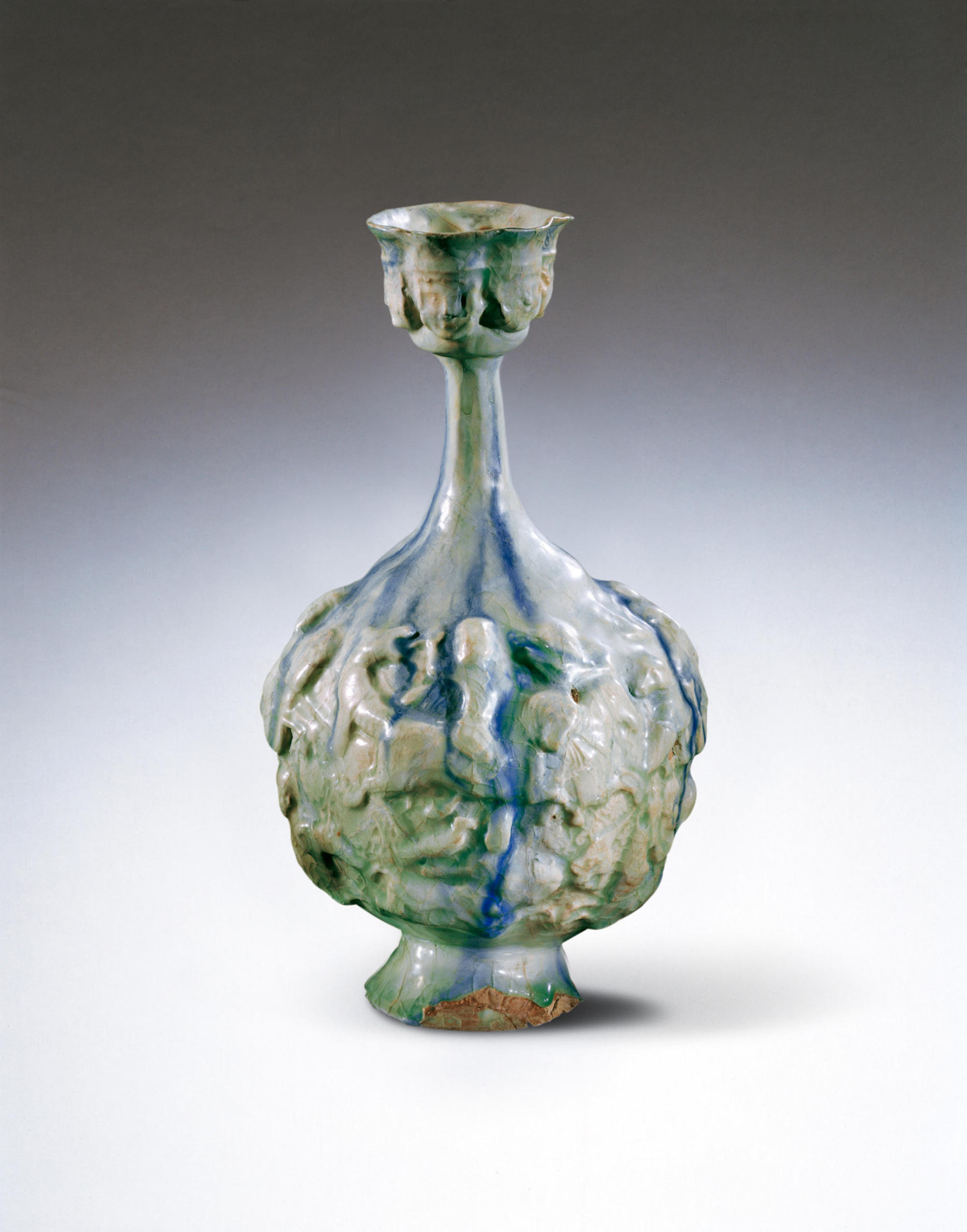
This round-bellied bottle, with a narrow, elongated neck ending in a dome shape, presents an extraordinary design in relief. The fine, white siliceous clay, which appeared in Iran at the turn of the eleventh and twelfth centuries, was covered with transparent glaze and later topped with cobalt blue and turquoise running glaze. On the belly is a dense decoration depicting a lion hunt scene. Several horsemen form a frieze, while footmen are struggling with wild animals. The design is completed with birds and plant motifs scattered among the various groups. The lion hunt theme - a princely hunt, par excellence - is to be found on a cup in the Musee du Louvre, Paris and on another similar one housed in the Riza-yi 'Abbasi Museum in Tehran (Makariou 2007, p. 87, notes 9-10). They are two pieces that are contemporary to this bottle, subject to the same technique but with an even more sophisticated design; here, the thick glaze reduces certain spectacular effects of the decoration. The tip of the neck, treated as a polylobe dome decorated with relief faces, can be observed on several Iranian pieces of the pre-Mongolian period (ibid., n. 11). The face motif is reminiscent of representations in relief of crowned personalities, such as small, glazed ceramic figurines sculpted in the round, or moulded, unglazed low relief figurines, found in the Shushan excavations (ibid., notes 12-13). The beautiful, lively vigour of the decoration makes this vase a remarkable milestone in pre-Mongolian ceramics, although the narrative content of this hunting episode is unknown to us today.
Note: This online resource is reviewed and updated on an ongoing basis. We are committed to improving this information and will revise and update knowledge about this object as it becomes available.
