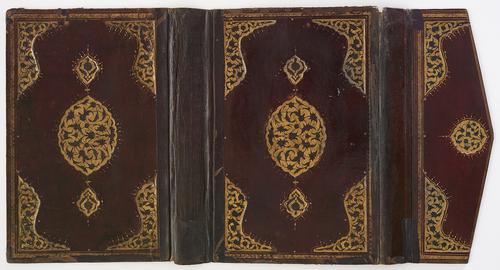
AKM389, Binding, outer covers and doublures: upper, lower, and flap
© The Aga Khan Museum
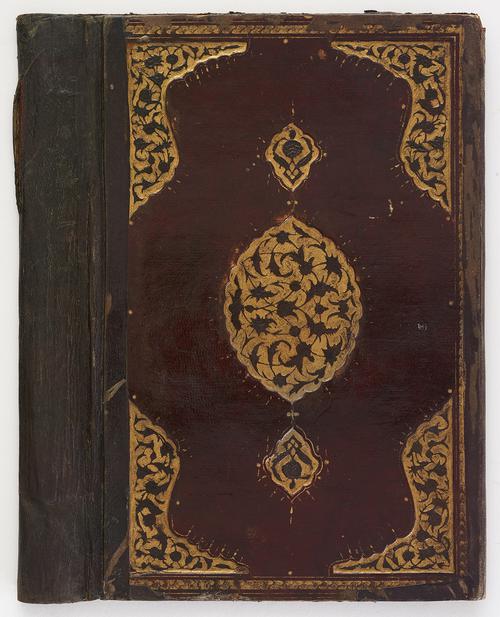
AKM389, Binding, outer covers and doublures: upper, lower, and flap
© The Aga Khan Museum
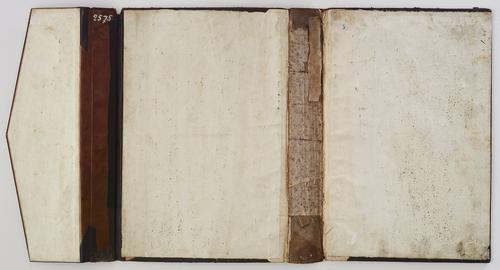
AKM389, Binding, outer covers and doublures: upper, lower, and flap
© The Aga Khan Museum
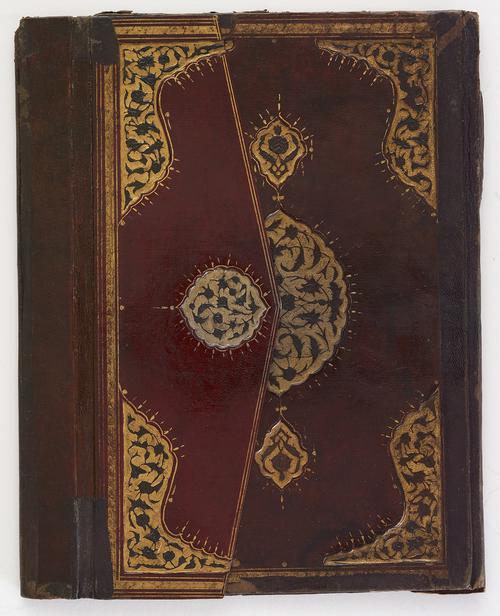
AKM389, Binding, outer covers and doublures: upper, lower, and flap
© The Aga Khan Museum
Click on the image to zoom

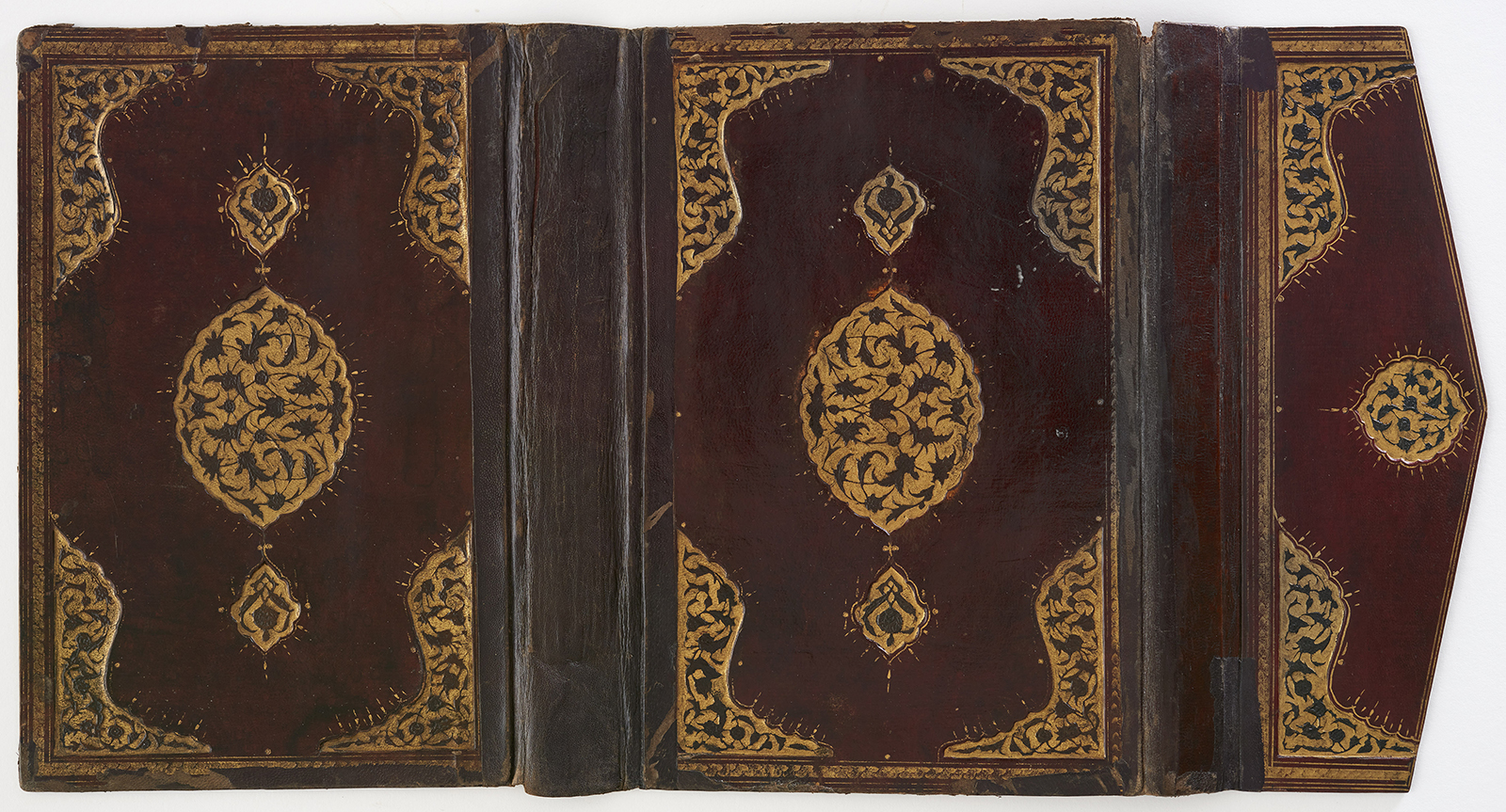
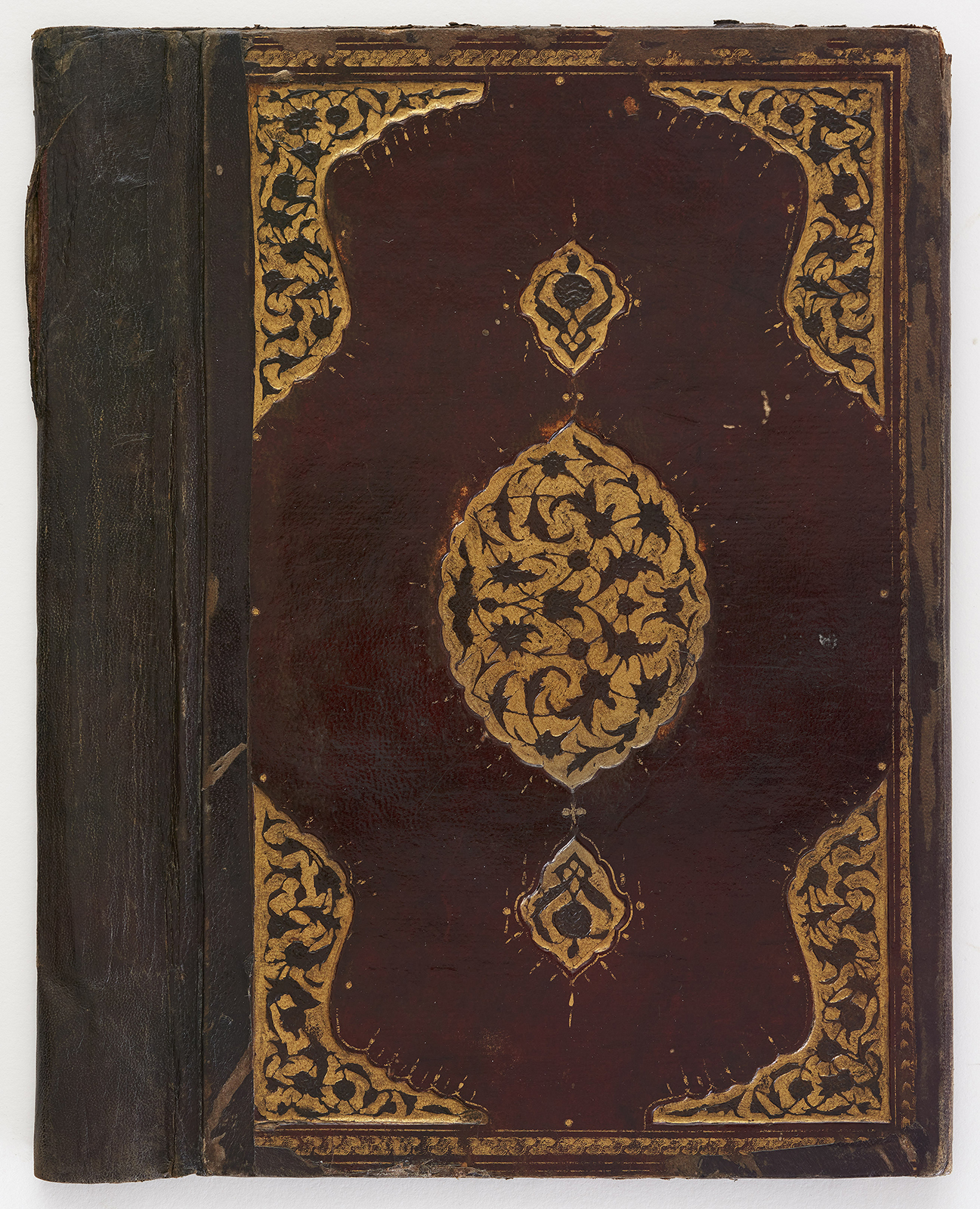
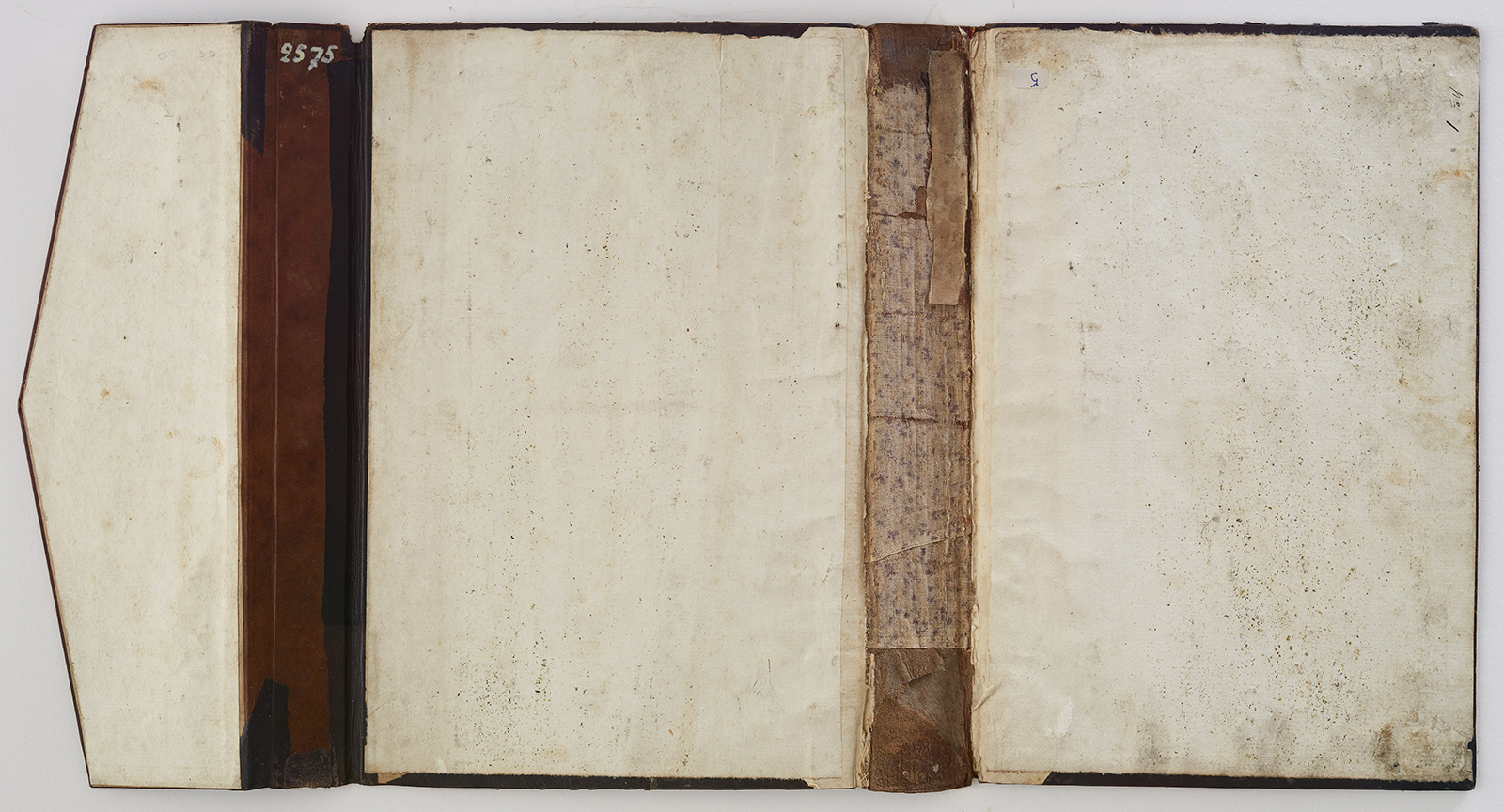
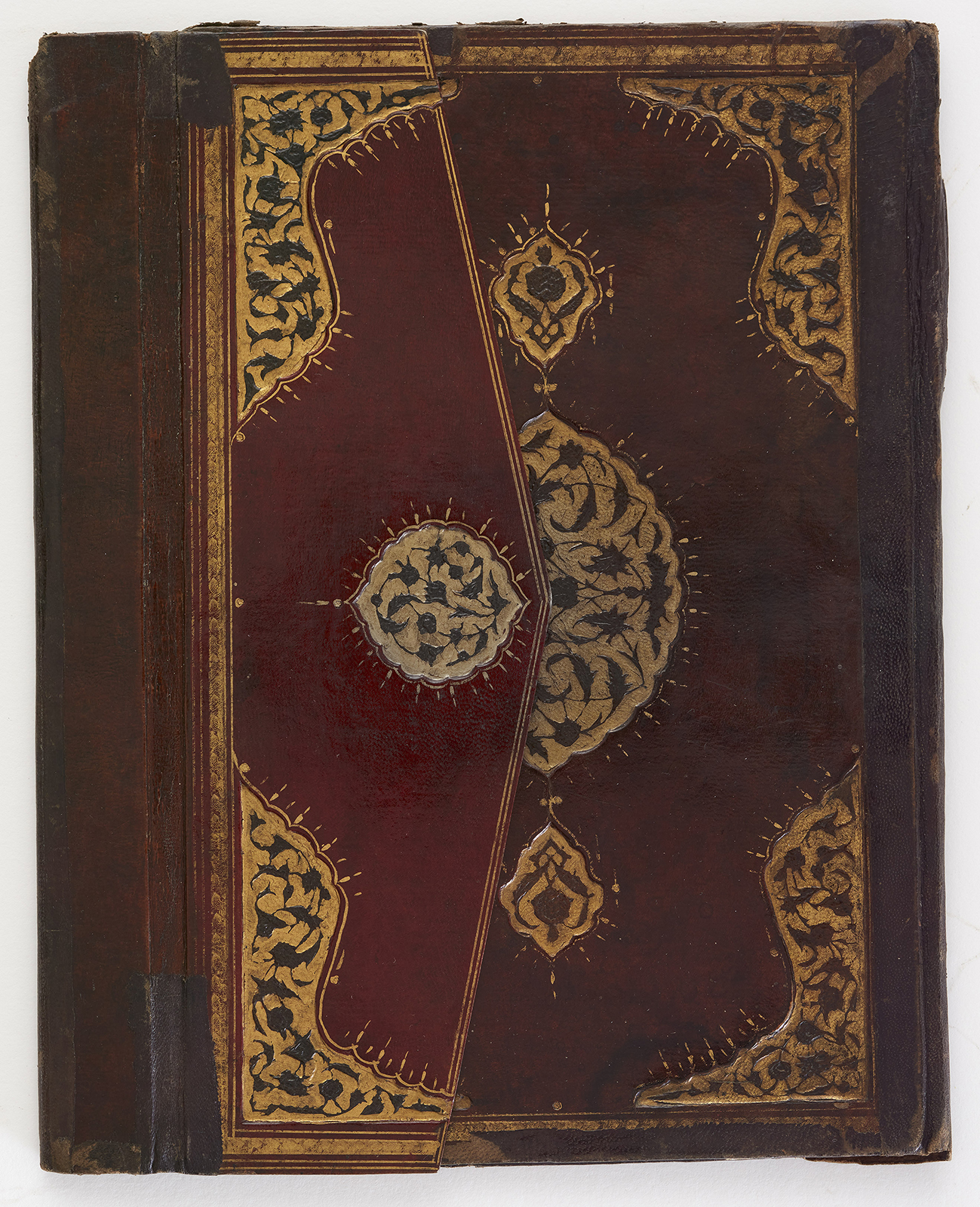
Binding, outer covers and doublures: upper, lower, and flap
- Accession Number:AKM389
- Place:Turkey
- Dimensions:57.7 cm × 29.9 cm
- Date:possibly late 16th century
- Materials and Technique:Leather, pasteboard, gold
The earliest surviving royal style Ottoman Turkish bindings were produced in Bursa and Edirne around 1430. For centuries, the decorative composition on the covers and doublures of Turkish bindings decoration remained essentially unchanged, consisting of a medallion with pendants and cornerpieces at each corner of the central field. After 1460, the nakkaşhane or court art studio began to develop at Topkapı Palace in Istanbul, resulting in an increase in the production of fine books bound by master binders. These bindings with medallion and cornerpiece compositions were often beautifully decorated with tooled and stamped designs on leather. At other times, craftsmen faced the covers in Italian or Bursa velvet, or Ottoman, Mamluk, or Chinese brocaded silk fabric.[1]
Further Reading
Beginning in the 16th century, the materials used to face the bindings of royal books and the decorative techniques became more diverse, and included jewel-studded gold and silver plaques, embroidered silk fabric, and embroidered leather. Lacquer decoration with figures and flower motifs was used on both the covers and doublures of leather bindings.[2]
The most common type of binding decoration after 1500 was a central oval medallion and cornerpieces. These were recessed and filled with stamped decoration in high relief, consisting of broad curving and sometimes broken stems bearing large stylized composite flowers, composite buds arrayed from small to large, and large lanceolate leaves. In some cases, a second tier of cloud motifs overlaid this lower level of decoration. The broad border was also recessed and filled with similar high relief stamped lanceolate leaves and stylized composite flowers. A recessed medallion often adorned the flap.
On royal bindings of this type, huge stylized composite flowers like cartouches commonly filled the border. The medallion, cornerpieces, and borders were either entirely gilded or featured only a gilded ground, leaving the motifs in the natural colour of the leather. From archival documents we learn that this style was the invention of the binder Mehmed Çelebi. Since the stamps made of leather or metal that he used for the medallions, cornerpieces, and border decoration on his bindings from 1525–30 onwards were later passed from hand to hand, his designs lived on for many years. Bindings in this style became known as the “Mehmed Çelebi style.”[3] Even when renewing the worn bindings of early books, the new bindings were made in his style.
Binders who followed in the footsteps of Mehmed Çelebi elaborated on his design by adding borders, cartouches, and inscriptions to create beautiful, elegant, and monumental bindings.[4] Even today modern binders who continue to create traditional Turkish bindings still follow the style of Mehmed Çelebi.[5] In no other country where Islamic bindings are produced has the decorative style of any binder proved so lasting.
Dating from the 16th to 19th centuries, a group of Turkish bindings in the Aga Khan Museum Collection is decorated in the Mehmed Çelebi style but by less skilful binders. One of these is AKM389, whose cover composition is in this tradition. However, only the ground of the decoration inside the medallion and cornerpieces is gilded, leaving the motifs reserved in the light chestnut colour of the leather. As well, there is no border. The decoration on the inner surface of the binding has not survived and the doublures consist only of paper. Most leather bindings on non-royal books in manuscript collections in Turkey, particularly those written or copied in the 18th century, have decoration of this type.[6]
- Zeren Tanındı
Notes
[1]. See Julian Raby and Zeren Tanındı, Turkish Book Binding in the 15th Century. The Foundation of an Ottoman Court Style.
[2]. Zeren Tanındı, “Books and Bindings,” 840–63.
[3]. Ibid., “Rugani Türk Kitap Kaplarının Erken Örnekleri,” 223–53, 241, 243; JM Rogers, Empire of the Sultans. Ottoman Art From the Collection of Nasser D. Khalili, 220; Esin Atıl, Süleymanname: The Illustrated History of Süleyman the Magnificent, 81; Tanındı, “Books and Bindings,” 847, 849–50.
[4]. Followers of Mehmed Çelebi and his family who flourished in the late 16th century and early 17th century are the binders Kara Mehmed, Süleyman, and Abdi b. Şaban. See Museum für Kunsthandwerk, Turkische Kunst und Kultur aus osmanischer Zeit. Ausstellungskatalog, 106, cat. 1/87; Massumeh Farhad and Simon Rettig, eds. The Art of the Qur’an. Treasures from the Museum of Turkish and Islamic Arts, 15 October 2016–20 February 2017, 340–41, cat. 62. For late examples, see Kemal Çığ, Türk Kitap Kapları, 48; and Mine E. Özen, Türk Cilt Sanatı, 61.
[5]. Uğur Derman, Doksandokuz İstanbul Mushafı, 373; Ahmet Akçan, ed., International Book Binding Meeting, İstanbul 28 November–14 December 2014. Symposium Papers and Exhibitions Catalogue, vols. I-II.
[6]. Dorothea Duda, Die Illuminierten Handschriften und Inkunabeln der Österreichischen Nationalbibliothek. Islamische Handschriften II/2. Die Handschriften in Türkischer Sprache, Abb. 20, 233; The Pera Museum, Ali Emîrî Efendi and his world. A selection from the Millet Manuscript Library: Fermans, berats, calligraphies, books, 334, 337, 350; Yıldıray Özbek, Kayseri Raşid Efendi Kütüphanesindeki Kitap Kapakları, 42, 43, 64, 70, 87, 107, 124, 134, 135, 178.
References
Çığ, Kemal. Türk Kitap Kapları. Ankara: Yapi ve Kredi Bankasi, 1971
Duda, Dorothea. Die Illuminierten Handschriften und Inkunabeln der Österreichischen Nationalbibliothek. Islamische Handschriften II/2. Die Handschriften in Türkischer Sprache. Wien: Verlag der Österreichischen Akademie der Wissenschaften, 2008.
Note: This online resource is reviewed and updated on an ongoing basis. We are committed to improving this information and will revise and update knowledge about this object as it becomes available.
